
CREATIVITY IS EVERYWHERE: HOW TO SHOW YOUNG PEOPLE THE ROLES HIDDEN IN PLAIN SIGHT
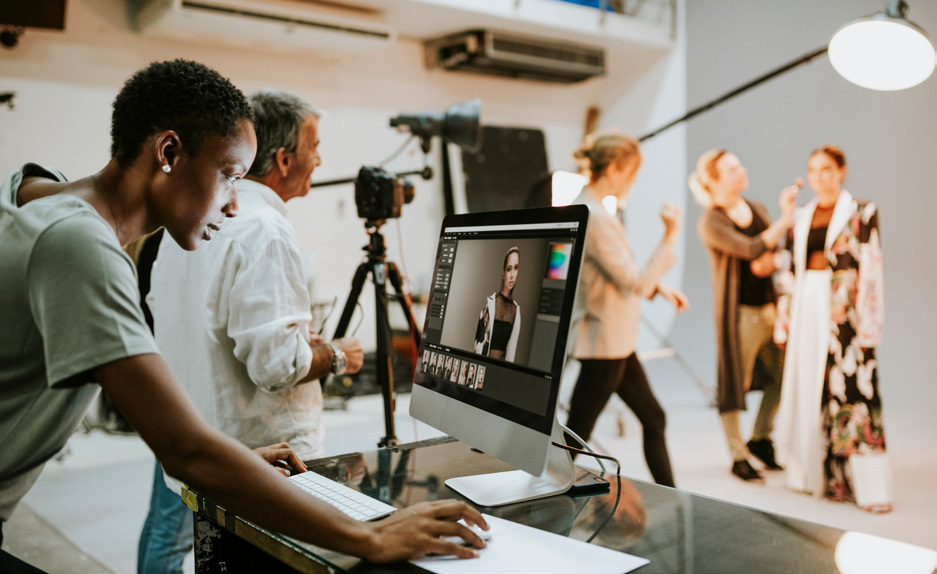
Careers education often makes creativity sound distant: film sets, theatres, recording studios. Exciting, yes, but abstract. Yet creative careers are already shaping the places young people walk through every day.
If you’ve ever stayed to the very end of a film and watched the credits roll, you’ll know the list of names seems endless. Every one of those names represents a role that had to be done, and many of them are jobs young people have never even heard of. Look at credits this way and they become a catalogue of career options.
A supermarket isn’t just shelves of food; it’s a stage set by packaging designers, in-store playlist curators, visual merchandisers and product photographers. The lighting has been designed. The layout is storyboarded. The adverts were scripted and shot by a creative team.
Take a high-street fashion outlet. The clothes are obvious, but creativity is in the displays, the window dressing, the shop playlists, the swing tags, the branding and the content that pops up on social media before a sale. Or think about a football stadium on match day: from the digital branding on pitch-side screens to the half-time show choreography, from fan experience apps to mascot costumes – it’s all creative work.
The message for careers advisers is clear: if learners say, ‘I don’t see myself in the arts,’ point out they’re already surrounded by it.
Why this matters
The UK’s creative industries are not niche. In 2023, they contributed £124 billion to the economy; 5.2 per cent of national output, more than aviation and agriculture combined (Department for Culture, Media & Sport, 2025). Globally, creative services exports such as design, advertising and R&D reached $1.4 trillion in 2022, while creative goods reached $713 billion (United Nations Conference on Trade and Development, 2024).
At the same time, nearly 28% of jobs in the UK creative industries are self-employed, compared with about 14% across the whole economy (House of Lords Library, 2024). In arts, culture and heritage, it rises to nearly 60% (PEC, 2023). Freelance and portfolio work isn’t a side note; it’s the business model.
Creativity and the environment
One problem Gen Z (young people born roughly between 1997 and 2012) care deeply about is the climate crisis. Here, the creative industries are not a spectator sport.
Architects and designers are experimenting with low-carbon materials. Fashion innovators are developing recycled fabrics and circular business models. Set designers are rethinking how stages and exhibitions can be built sustainably.
Just as importantly, communicators and storytellers are turning complex climate data into campaigns, films and interactive experiences that move people to act.
If a young person is passionate about the planet and climate action, the creative industries are one of the fastest-growing spaces where that passion meets employment.
Teamwork they can picture
It helps to use examples that feel familiar. A school play or concert is a microcosm of the sector. Yes, there are performers, but also students managing sound, lighting, staging, publicity, even front-of-house. The show only works because every role connects. That’s true of a West End production, a music festival, a museum exhibition or a game update.
Framing creativity as teamwork, not a solo act, is vital. It shows learners that the skills of collaboration, organisation and communication are every bit as valuable as artistic ‘talent’.
Opportunities for SEND learners
For learners with special educational needs and disabilities, the creative sector can feel closed off. Yet more employers are recognising that accessibility is a driver of innovation. Adaptive tools – from eye-tracking software to alternative controllers and captioning suites – are making creative work more inclusive than ever.
Roles in animation, editing, coding and sound can be flexibly structured and are often remote, offering SEND learners more choice over how and where they work.
Inclusive design itself is now a growth area, creating new roles such as accessibility coordinators and inclusive design consultants. Festivals test sensory routes with autistic audiences, while galleries and streaming services increasingly commission accessibility specialists. SEND learners are not on the margins; they are becoming valued experts whose lived experience makes creative work stronger.
Rethinking the classroom
So how do we translate this into practice? Start with what’s in front of learners. Supermarket shelves, football matches, high-street fashion, social media feeds. Use these as gateways to talk about the unseen creative roles. Then, flip the question: instead of asking ‘what job do you want?’, ask ‘what problem do you want to help solve?’
In lessons, frame projects as ’productions’ not ‘tasks’. A production has departments, deadlines and handovers. Make the handover part of the assessment; the ability to pass work on clearly is one of the sector’s most employable skills. When you invite speakers, think in teams rather than individuals: bring a producer, a designer, a technologist and an accessibility lead together. Five minutes each, and learners see the interlocking ecosystem.
Lowering the barriers
Breaking in doesn’t always require moving to London or paying for expensive training. Many software companies run online learning platforms: Adobe’s Education Exchange, Autodesk tutorials, Unity Learn and Unreal Engine’s Learning Hub. These ‘vendor academies’ are free or heavily discounted for students, offering badges and portfolio-ready projects.
Closer to home, ScreenSkills provides free e-learning modules, job profiles and training bursaries for film, TV, animation and games. Creative UK regularly shares opportunities and competitions for early-career talent. And Creative Portal collates pathways and opportunities across the creative industries.
Add in local routes – games in Dundee, TV in Cardiff, festivals in Manchester, heritage tech across regional museums – and the message is clear: opportunity is national, not just London-centric.
Reading the map
If I could leave advisers with one image, it would still be the closing credits of a film. Not because we should all sit through them religiously, but because they are the clearest map of how creative work really happens.
Hundreds of names. Hundreds of roles. Each one part of a team.
Our task is to show learners how to read that map, and to remind them that the same creative fingerprints are already all over the spaces they move through every day.
Useful links
Creative Portal (2025). Careers and opportunities in the creative industries. creativeportal.co.uk (accessed 25 September 2025).
Creative UK (2025). Support, resources and opportunities for early-career creatives. wearecreative.uk Department for Culture, Media and Sport (2025).
Department for Culture, Media & Sport (2025), DCMS Economic Estimates: Annual GVA 2023 (provisional). gov. uk/government/statistics/dcms-economic-estimates-gva-2023-provisional/dcms-economic-estimates-annual-gva-2023-provisional (accessed 25 September 2025).
House of Lords Library (2024). Creative industries: growth, jobs and productivity. lordslibrary. parliament.uk/creative-industries-growth-jobs-and-productivity/ (accessed 25 September 2025).
PEC (2023). The creative self-employed workforce in England and Wales. pec.ac.uk/blog_entries/creative-self-employed-workforce-in-england-and-wales/ (accessed 25 September 2025).
Screen Skills (2025). Free online learning for film, TV, animation, games and VFX. screenskills.com (accessed 25 September 2025).
United Nations Conference on Trade and Development (2024). Creative economy booms, with services leading the growth. unctad.org/news/creative-economy-booms-services-leading-growth (accessed 25 September 2025).